Coturnix Quail Color Genetics — A Beginner's Guide to Plumage & Breeding
Coturnix quail color genetics looks intimidating until you learn one bird: the Pharaoh wild-type. Every one of the 20-plus named plumage varieties in Japanese quail is simply a mutation described relative to Pharaoh, and once you know four inheritance patterns you can predict what a cross will produce and even sex an entire hatch by color on day one. This guide gives you the working vocabulary, the reversed ZZ/ZW sex system, the Fawn locus that explains Italian and Golden Manchurian, sex-linked feather sexing, and the recessive gene behind the celadon blue egg — the foundation a first-time breeder actually needs.
Want it done for you instead? Flock Rx and Elite Flock Protection get a specialist on your flock — or start with the $47 Desert Flock Field Guide.
Key Takeaways
- Every quail plumage variety is a mutation from the Pharaoh wild-type — learn Pharaoh first and describe everything else relative to it.
- Quail sex chromosomes are reversed from mammals: males are ZZ and females are ZW, and the short W chromosome rarely carries mutations.
- Four inheritance patterns explain almost every outcome: dominant, recessive, incomplete dominant, and sex-linked.
- The Fawn locus is the textbook incomplete-dominant: zero copies = Pharaoh, one = Italian, two = Golden Manchurian; Italian x Italian gives roughly 25/50/25.
- A sex-linked cross (such as Roux) lets you sex the whole hatch by color at day one — but only for the first generation of that specific cross.
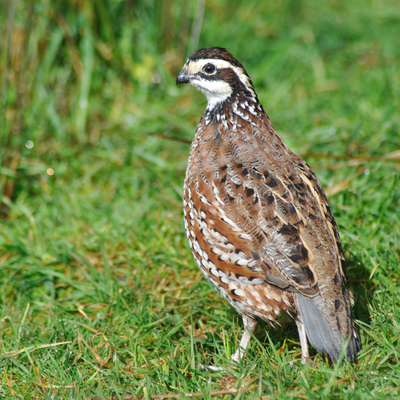
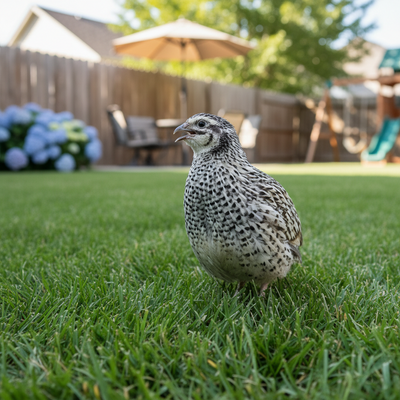
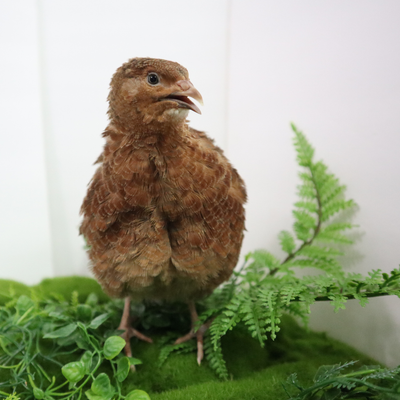
- Pharaoh is feather-sexable by about week three: males show a solid copper chest, females a cream chest with black dots.
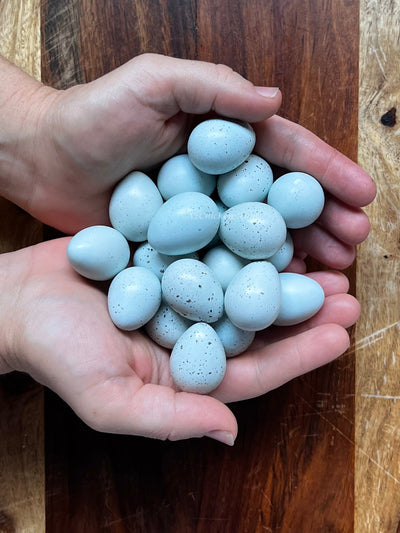
- The celadon blue egg is recessive — a hen needs two copies to lay blue, which is why blue eggs can surprise you out of carrier parents.
How do you tell male and female coturnix quail apart?
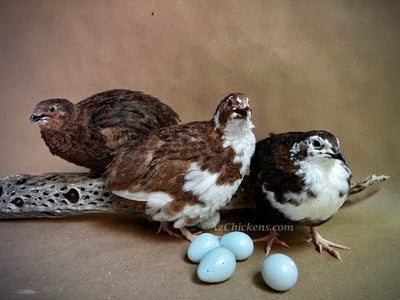
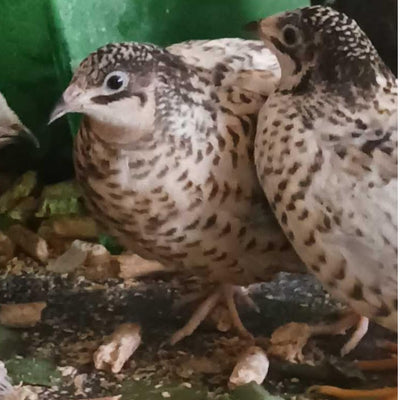
In the Pharaoh wild-type and its close relatives, the sexes split visibly by about three weeks: males develop a solid copper or rust chest, while females keep a cream chest flecked with small black spots. That makes Pharaoh feather-sexable with no venting or DNA test. Other varieties differ — some are feather-sexable, some are not — which is exactly what the genetics guide lays out variety by variety.
What is the most common coturnix quail color?
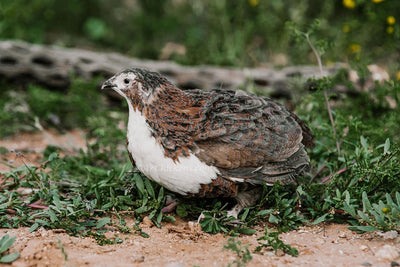
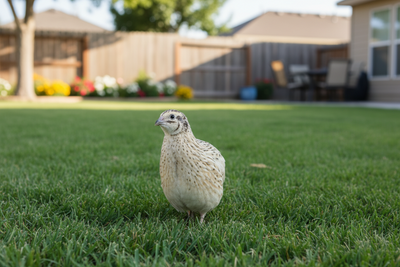
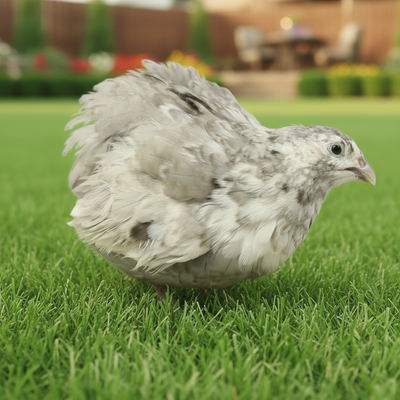
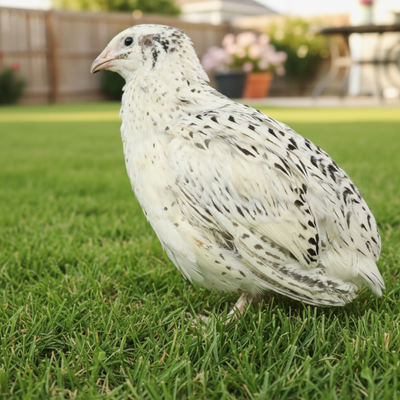
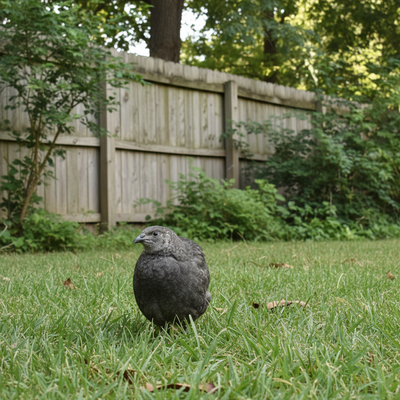
Pharaoh is the baseline and the most common — it is what wild Japanese quail look like, a complex streaked pattern in browns and creams. Every fancy variety, from Italian to Tuxedo to Celadon-layers, is a named mutation measured against Pharaoh. If you are new to quail genetics, master the Pharaoh pattern first; the rest of the varieties are just descriptions of how they differ from it.
Can you sex quail chicks by color?
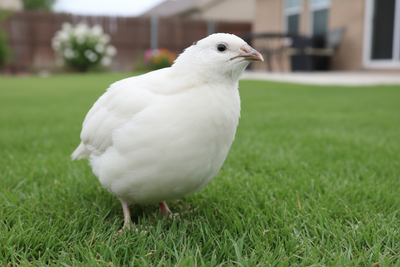
Sometimes, and it is one of the most useful tricks in quail breeding. Set up a sex-linked cross — a male homozygous for a sex-linked mutation over a wild-type female — and every daughter shows the color while sons look wild-type, so you can sex the whole hatch at day one. The catch: it only works for the first generation of that cross. Breed those daughters back to a normal male and the color split disappears.
What makes a celadon quail lay blue eggs?
The celadon blue egg comes from a recessive gene. A hen needs two copies to lay blue; one copy makes her a carrier that lays normal eggs but can pass the trait on. That recessiveness is why not every bird labeled celadon actually lays blue, and why blue eggs can appear as a surprise from two carrier parents. A carefully selected celadon line lays blue essentially 100% of the time.
How do you breed golden coturnix quail?
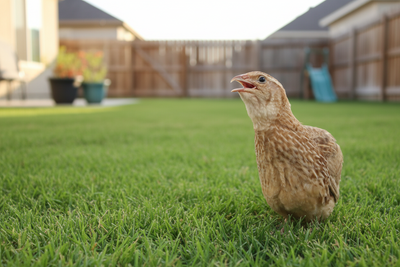
Golden Manchurian carries two copies of the Fawn mutation, so you reach it through Italian, which carries one. Breed two Italians together and you get roughly 25% Golden Manchurian, 50% Italian, and 25% Pharaoh in a single hatch — every Fawn expression at once. To fix a pure golden line, breed Golden Manchurian to Golden Manchurian, since two homozygous parents breed true.
What to Look For: The Vocabulary That Unlocks the Rest
Coturnix quail color genetics runs on a handful of terms. Get these and the variety pages read like plain English.
Genes, Alleles, and Loci
A gene is a unit of heredity; an allele is one variant of that gene; a locus is its address on the chromosome. Every named quail variety is a mutation — a changed allele that produces a new look — from the Pharaoh wild-type.
The Reversed Sex System
Quail sex is the opposite of mammals: males are ZZ, females are ZW. The W chromosome is short and rarely carries mutations, which is exactly why sex-linked color tricks work in one direction and not the other.
Homozygous vs. Heterozygous
Homozygous means two copies of the same allele (which breeds true); heterozygous means two different alleles. That single distinction decides whether a pairing produces a uniform hatch or a mix.

The Four Inheritance Patterns
Dominant and Recessive
A dominant allele shows with a single copy — one parent carrying it is enough. A recessive allele needs two copies to appear; one copy makes a hidden carrier. Those hidden carriers are why surprise chicks show up in a hatch.
Incomplete Dominant
One copy gives a halfway look, two copies the full look. Italian (one Fawn copy) versus Golden Manchurian (two) is the clearest example in all of quail genetics.
Sex-Linked
A mutation sitting on the Z chromosome. Cross it the right way and daughters show the trait at hatch while sons carry it hidden — day-one sexing by color.
Start With Pharaoh, the Baseline
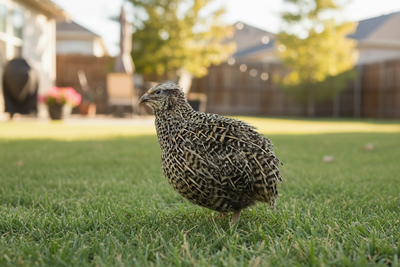
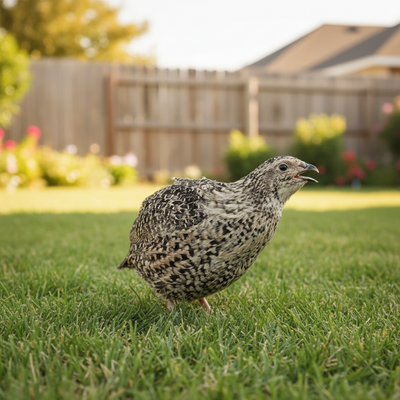
Pharaoh is what wild Japanese quail look like: browns and creams in a complex streaked pattern. By about three weeks the sexes separate — males a solid copper chest, females a cream chest with disconnected black dots — so Pharaoh is feather-sexable with no venting. Read Pharaoh first; every other variety is defined by how it differs from it.
The Fawn Locus: Pharaoh, Italian, Golden Manchurian
The single most useful thing a new breeder can understand. Zero Fawn copies gives Pharaoh, one copy gives Italian, two copies give Golden Manchurian — the same gene at three doses.
Breed Two Italians If
You want variety and the full Fawn locus in one hatch. Italian x Italian yields roughly 25% Golden Manchurian, 50% Italian, and 25% Pharaoh — every expression at once. It is the most instructive cross a beginner can run.
Breed a Pure Line If
You want uniform chicks. Two homozygous parents breed true: Golden Manchurian x Golden Manchurian gives Golden Manchurian, and Pharaoh x Pharaoh gives Pharaoh. You cannot make Golden Manchurian without passing through Italian first.
📚 Get the full Quail Color Genetics Guide — free PDF
Every inheritance pattern plus 22 plumage varieties, one per page, with the single breeding rule that matters for each.
Sexing by Color and the Celadon Egg
Feather Sexing and Sex-Linked Crosses
Some varieties are feather-sexable outright; others require a sex-linked cross. Breed a male homozygous for a sex-linked mutation to a wild-type female and every daughter shows the color at hatch — but the trick works only for that first generation.
The Celadon Blue Egg
Celadon is a recessive egg-color gene, not a plumage color. A hen needs two copies to lay blue; a single copy makes a carrier that lays normal eggs. That is why a selected celadon line matters — ours lays blue essentially 100% of the time, some eggs lightly freckled.
How to Plan a Cross
Decide the trait you want, identify its inheritance pattern, and choose parents accordingly — homozygous pairs for uniformity, an Italian pair to sample a locus, a sex-linked cross for day-one sexing. Keep pencil records of every pairing; hidden recessive carriers are only obvious in hindsight.
Read also: Quail Hatching Eggs · How to Incubate Quail Eggs
Where to Go From Here
Work With Us
Planning a breeding project and want a second set of eyes on your pairings or your line? Book a Flock Rx consult, or build a lasting breeding program with Elite Flock Protection.
Start With Known Genetics
A breeding project is only as good as its foundation stock. Our quail hatching eggs and Celadon and Jumbo Brown lines come from selected, NPIP-tested birds — and the incubator and candling gear we use is on our Flock-Tested Picks. A portion of every purchase helps put free chicks in the hands of local 4-H, FFA, military, and teacher families.
Frequently Asked Questions
How many plumage varieties do Japanese quail have?
Why do quail have ZZ and ZW instead of XY?
If I breed two celadon carriers, will I get blue eggs?
Does egg color relate to feather color in quail?
Do I need to understand genetics to keep quail for eggs?
Sources
- Cheng, K. M., & Kimura, M. (1990). Mutations and major variants in Japanese quail. In R. D. Crawford (Ed.), Poultry Breeding and Genetics (pp. 333–362). Amsterdam: Elsevier.
- Mississippi State University Extension Service. Raising Japanese (Coturnix) Quail. https://extension.msstate.edu/publications/raising-japanese-coturnix-quail
- Penn State Extension. Small-Scale Poultry Production. https://extension.psu.edu/small-scale-poultry-production
- National Research Council. (1994). Nutrient Requirements of Poultry (Ninth Revised Edition). Washington, DC: National Academies Press. https://doi.org/10.17226/2114
- University of Georgia Extension. Incubating Eggs. https://extension.uga.edu/publications/detail.html?number=B1363