Quail Chick Care — The First Days, Brooding & Beyond
Quail chick care in the first days decides how many chicks you keep. Coturnix chicks grow roughly ten times faster than chickens and carry no fat reserves, so a cold night, a deep waterer, or an empty feeder does damage fast. The upside: brooding is not complicated — it just demands attention for four weeks. This guide covers the whole run: setting up and pre-warming the brooder, water and feed from hour one, the week-by-week temperature step-down, the beginner mistakes that kill chicks, and the move to adult housing and feed. Get the first 48 hours right and most other problems take care of themselves.
Want it done for you instead? Flock Rx and Elite Flock Protection get a specialist on your flock — or start with the $47 Desert Flock Field Guide.
Key Takeaways
- Pre-warm the brooder to 95°F measured at chick level (at the floor, not near the lamp) before any chick arrives.
- Dip each chick’s beak in water on arrival — a chick that does not drink within about 6 hours can die of dehydration surrounded by water.
- Drop brooder temperature 5°F a week: 95, 90, 85, 80. Remove heat at 4 weeks or full feathering, whichever comes first.
- Feed a 28–30% game-bird starter, never standard chick starter — quail need the extra protein and grow far faster.
- Use a shallow, drown-proof waterer with marbles or pebbles in the base; quail chicks can drown in a quarter inch of water.
- Always keep a cool zone — heat one end only so chicks self-regulate by moving toward or away from the heat.
- At 7–8 weeks switch to an 18–22% game-bird layer/breeder feed; house adults in cages 8–10 inches tall or pens 4 ft+, never in between.
How do you take care of newly hatched quail chicks?
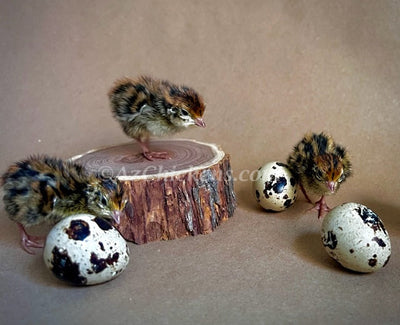
Move chicks to a pre-warmed 95°F brooder once they are fully dry and fluffy, usually 6–12 hours after hatching. Dip each chick’s beak in room-temperature water so it learns where to drink, offer a 28–30% game-bird starter, and watch the group for the first two hours. Chicks huddled under the heat are cold; chicks pressed to the walls are hot; chicks spread evenly and pecking are just right.
What temperature do quail chicks need?
Start at 95°F at chick level in week one and drop 5°F each week — 90°F in week two, 85°F in week three, 80°F in week four — then remove heat once chicks are fully feathered, typically around 4 weeks. Always heat only one end of the brooder so there is a cool zone; a brooder with no escape from the heat can cook chicks even when the thermometer reads correct.
What do you feed baby quail?
Feed a game-bird or turkey starter at 28–30% protein from day one. Do not substitute standard chick starter — it does not have enough protein for how fast quail grow. Grind large crumble finer for the first few days, and scatter feed on a paper towel beside the feeder so chicks find it easily. Check feed twice daily; a feeder empty for 8 hours can permanently stunt a chick with no fat reserves.
How long do quail chicks need a heat lamp?
About four weeks, or until the chicks are fully feathered, whichever comes first. Reduce the temperature 5°F each week so they acclimate gradually, and if your nights drop below 65°F, wait for full feathering before removing heat entirely. Read the chicks, not just the thermometer — evenly spread, active birds tell you the heat is right.
When can quail chicks go outside?
Once they are fully feathered and off supplemental heat — generally around 4 to 6 weeks — quail can move to outdoor housing, provided nights are mild and the enclosure is predator-proof. In a hot desert summer, place the cage in deep shade with cool water always available; in cold snaps, wait for full feathering and provide a windbreak. Move them out on a mild day, not into a temperature extreme.
What to Look For: Set Up the Brooder Before the Hatch
Quail chick care starts a day or two before the first chick is dry. The brooder should be built, warmed, and stocked so there is no scrambling on hatch day.
The Right Container and Space
A 30–50 gallon plastic bin holds up to about 30 chicks for the first two weeks, with hardware cloth as a ventilated lid. Give each bird at least one square foot through four weeks — a bin that looks huge on day one is a cramped cage by week three, and crowding brings pecking, stress, and disease.
Bedding That Prevents Splay Leg
Use pine shavings, never cedar (the oils irritate chick lungs), and lay paper towels on top for the first three days so chicks can grip. A smooth floor causes splayed leg, which is permanent.
A Heat Source and a Cool Zone
Warm only one end of the brooder so chicks self-regulate. Pre-warm to 95°F measured at the floor, not near the lamp, before any chick lands in it.

Water and Feed From Hour One
Drown-Proof Water
Standard chicken waterers are too deep — quail chicks drown in a quarter inch. Use a quail-specific waterer or drop marbles or pebbles into the base to reduce depth, and let the water warm to brooder temperature before the chicks go in. Dip each beak on arrival.
28–30% Game-Bird Starter
Quail chicks grow about ten times faster than chickens and need the protein to match. Feed a 28–30% game-bird starter, grind large particles fine for the first few days, and scatter crumble on a paper towel beside the feeder so chicks find it. Check feed twice daily — they have no fat reserves.
Manage Temperature Week by Week
Choose a Brooder Plate If
You want the safest, most hen-like heat. A radiant brooder plate warms chicks from above the way a mother would, cuts fire risk, and saves electricity — the gold standard for a small covey.
Choose a Heat Lamp If
You are brooding a large batch or already own one. Use a 250-watt red bulb, never a white one — constant bright light stresses chicks and disrupts sleep. Mind the fire risk and secure it well above the bedding.
Read the Chicks, Not Just the Thermometer
Piled tightly under the heat means too cold; pressed to the walls and panting means too hot; spread evenly and pecking means perfect. Drop 5°F a week and remove heat at four weeks or full feathering.
📚 Get the full Quail Hatch & Care Guide — free PDF
Setting eggs to long-term flock care, step by step — incubation, brooding, and housing in one guide.
Common Beginner Mistakes
A Waterer That Is Too Deep
The single most common killer of quail chicks. If the base is deeper than a quarter inch, add marbles today.
Chick Starter Instead of Game-Bird Starter
Standard 18% chick starter does not carry enough protein for quail. Chicks on it grow slowly and feather poorly — use 28–30% game-bird feed.
No Cool Zone
Heating the whole brooder evenly traps chicks with nowhere to cool off. Always leave one end unheated.
Moving to Adult Housing and Feed
Switch Feed at 7–8 Weeks
As birds reach laying age, transition to a game-bird or turkey layer/breeder feed at 18–22% protein and 2–3% calcium — the elevated calcium supports eggshell quality. Never feed a chicken layer ration; it does not meet quail needs.
Get the Cage Height Right
House adults in cages 8–10 inches tall or pens 4 ft or taller — never the 12–36 inch middle range, where a startled quail can launch vertically and injure its neck. Offer chick-size grit and a shallow sand dust bath, which quail use daily.
Read also: How to Incubate Quail Eggs · Live Quail for Sale
Where to Go From Here
Work With Us
Losing chicks and not sure why, or setting up your first brooder? Our team walks new keepers through it. Book a Flock Rx consult, or set your whole flock up right with Elite Flock Protection.
The Gear We Actually Use
For the brooder plate, drown-proof waterer, game-bird starter, and electrolytes we run, see our Flock-Tested Picks.
Start With Strong Chicks
The healthiest brood begins with quality stock. Browse our quail hatching eggs and Celadon and Jumbo Brown lines from clean, NPIP-tested birds. A portion of every purchase helps put free chicks in the hands of local 4-H, FFA, military, and teacher families.
Frequently Asked Questions
How long can quail chicks survive after hatching without food or water?
Why are my quail chicks piling up in one corner?
Do quail chicks need grit?
Can I brood quail chicks with chickens?
When do quail chicks start laying eggs?
Sources
- National Research Council. (1994). Nutrient Requirements of Poultry (Ninth Revised Edition). Washington, DC: National Academies Press. https://doi.org/10.17226/2114
- Mississippi State University Extension Service. Raising Japanese (Coturnix) Quail. https://extension.msstate.edu/publications/raising-japanese-coturnix-quail
- Penn State Extension. Small-Scale Poultry Production. https://extension.psu.edu/small-scale-poultry-production
- University of Arizona Cooperative Extension. Managing chickens in extreme heat. https://extension.arizona.edu/news/managing-chickens-extreme-heat
- Wasti, S., Sah, N., & Mishra, B. (2020). Impact of Heat Stress on Poultry Health and Performances. Animals, 10(8), 1266. https://doi.org/10.3390/ani10081266