How to Incubate Quail Eggs — Coturnix Incubation Guide for Arizona
Learning how to incubate quail eggs is the fastest, cheapest way to grow a covey — Coturnix (Japanese) quail hatch in about 17 days, versus 21 for a chicken, and the whole process runs on a machine the size of a bread box. But quail incubation is unforgiving of guesswork: a smaller egg heats, cools, and dries faster than a chicken egg, so the same swing a chicken shrugs off can wipe a quail clutch. This guide walks the entire cycle — sourcing and storing eggs, calibrating your incubator, the 99.5°F/40–50% target, turning and candling, lockdown at day 14, and the day-17 hatch — the exact process we run in our Arizona hatchery.
Want it done for you instead? Flock Rx and Elite Flock Protection get a specialist on your flock — or start with the $47 Desert Flock Field Guide.
Key Takeaways
- Coturnix quail hatch on day 17 (chickens take 21). Set eggs 7 days old or less — after 10 days hatch rates fall off a cliff.
- Target 99.5°F and 40–50% humidity for days 1–14 in a forced-air incubator, or 102°F measured at the top of the eggs in a still-air unit.
- Above 104°F embryos die within hours; below 97°F development stalls. Consistency matters more than a perfect number.
- Turn eggs at least 4 times a day through day 14, then stop turning at lockdown.
- Raise humidity to 50–60% at lockdown (day 14) — slightly lower than a chicken hatch — and stop opening the lid.
- Candle at day 7 (look for a web of veins) and day 14 (remove any clear or foul-smelling egg before it explodes).
- Expect 80%+ hatch from local eggs and 40–60% from shipped eggs; rest shipped eggs pointy-end down 12–24 hours before setting.
How long does it take to incubate quail eggs?
Coturnix quail eggs incubate for about 17 days — the shortest incubation of any common poultry, and roughly four days faster than a chicken. A cool incubator or the stress of shipped eggs can push the hatch to day 19 or 20, which is normal and not a reason to intervene. Count day 1 from the moment the eggs go into the incubator, not from when they were laid.
What is the best temperature and humidity for incubating quail eggs?
Run a forced-air incubator at 99.5°F, or a still-air incubator at about 102°F measured at the top of the eggs. Hold humidity at 40–50% for the first 14 days, then raise it to 50–60% at lockdown. Because most built-in sensors drift, place a separate digital thermometer and hygrometer at egg level and base every decision on those, not the incubator’s own display.
How often do you turn quail eggs in an incubator?
Turn quail eggs at least four times a day from day 1 through day 14, at the same times each day. Mark an X on one side and an O on the other so a single glance confirms every egg rotated. An automatic turner does this for you and removes the biggest variable beginners get wrong. Stop turning entirely at day 14 — the lockdown phase.
When do you candle quail eggs?
Candle at day 7 and again at day 14. At day 7 a developing egg shows a spider-web of veins spreading from a central dot; a completely clear egg is infertile or an early quitter. At day 14 a healthy egg is mostly dark, and this is your last chance to pull any still-clear or foul-smelling egg before it can explode and contaminate the clutch. Keep each session under 10 minutes so the eggs don’t chill.
What day do coturnix quail eggs hatch?
Coturnix quail normally hatch on day 17, though jostled shipped eggs or a slightly cool incubator can delay it to day 19 or 20. Once a chick pips the shell it usually finishes within 12–24 hours. Wait a full 24 hours after the first chick hatches before opening the incubator — chicks absorb the yolk sac and can survive 24–48 hours inside without food or water.
What to Look For Before You Set a Single Egg
How to incubate quail eggs successfully is decided before day one — by the eggs you set and the machine you set them in. Five things predict your hatch.
Fresh Eggs, Seven Days or Less
Freshness is everything. Set eggs that are 7 days old or less; after 10 days hatch rates fall off a cliff. Write the lay or arrival date on each egg in pencil, and store unset eggs at 55–65°F in a cool room, never the refrigerator, large end slightly elevated and rotated daily.
Confirmed Fertility
Eggs from a mixed flock are not automatically fertile. Keep one male per 3–5 females; an all-female flock produces zero fertile eggs. A well-managed Coturnix flock runs above 95% fertility.
A Calibrated Incubator
The sensors that ship with most incubators are poorly calibrated. Add a separate digital probe thermometer and hygrometer at egg level and trust those. Power the unit on 24–48 hours before setting and let it fully stabilize.
Never-Washed, Uncracked Shells
The egg’s natural bloom seals the shell and protects the embryo — washing removes it, so never wash hatching eggs. Never set a cracked one either; it will not hatch and can introduce bacteria that harm the whole clutch.
The Right Rest for Shipped Eggs
Shipping damages eggs. Rest shipped eggs pointy-end down for 12–24 hours before setting to re-settle the air cell, and expect 40–60% hatch versus 80%+ for local eggs. If eggs baked at 100°F+ in a summer truck, set them immediately and skip turning for the first 24 hours.

The Numbers That Run a Quail Hatch
Temperature: 99.5°F Forced-Air
Forced-air incubators run 99.5°F throughout; still-air units need 102°F measured at the top of the eggs. Above 104°F embryos die within hours; below 97°F development stalls. Consistent beats perfect — small, slow swings matter far less than a sudden spike, and quail eggs punish spikes harder than chicken eggs because they heat and cool so fast.
Humidity: 40–50%, Then 50–60%
Hold 40–50% relative humidity for the first 14 days, then raise to 50–60% at lockdown. Humidity too high is far more common than too low; condensation on the inside walls means back off the water.
Turning: Four Times a Day, Minimum
Turn at least four times daily through day 14, at the same times each day. An automatic turner removes the single biggest variable beginners get wrong.
📚 Get the full Quail Incubation Guide — free PDF
Our complete day-by-day incubation playbook, from setting eggs to lockdown to the hatch. Free, no strings.
Forced-Air vs. Still-Air, Auto-Turner vs. Hand
Choose a Forced-Air Turning Incubator If
You want the most forgiving path. A fan-circulated incubator with a built-in turner holds an even 99.5°F and rotates the eggs for you — the setup we tell every first-timer to buy. A couple-dozen-egg tabletop unit is plenty for most families.
Choose Still-Air or Hand-Turning If
You already own one and want to make it work. Run still-air at 102°F at the top of the eggs, turn by hand at least four times a day on a fixed schedule, and log every reading — the discipline is the whole game.
Why Quail Are the Fastest Hatch on the Homestead
Seventeen Days to a Chick
Coturnix normally hatch on day 17, and hens can be laying by 6–8 weeks. From set to fluffy chick is under three weeks — nothing else in poultry moves this fast.
A Skill That Pays Every Season
Hatching is a skill for every homestead. Dial it in once and you can refill your covey, or a friend’s, on demand at the cost of eggs and electricity.
How to Incubate Quail Eggs, Step by Step
Set Up and Stabilize (1–2 Days Before)
Power on, target 99.5°F and 40–50% humidity, and let it settle. Adjust slowly — make one change, wait an hour, read the result. Keep the incubator away from windows, vents, and exterior walls; a 5°F room swing can pull it 2–3 degrees off.
Set Eggs and Turn (Days 1–14)
Day 1 starts the moment eggs go in. Turn at least four times daily, log temperature and humidity every day, and resist opening the lid — a quick peek costs 20–30 minutes of recovery.
Candle at Day 7 and Day 14
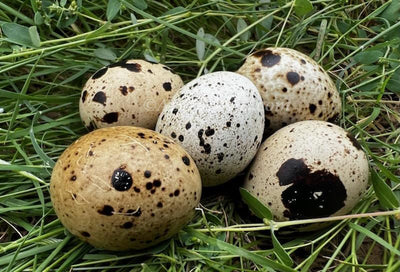
In a dark room, hold each egg to a bright LED. Day 7: look for a web of veins from a central dot. Day 14: a healthy egg is mostly dark; remove any still-clear or foul-smelling egg before it explodes. Quail shells are speckled and thick, so a purpose-built candler beats a phone flashlight.
Lockdown at Day 14
Remove the turner, lay eggs on a rough hatching surface so chicks don’t develop straddle-leg, raise humidity to 50–60%, and stop opening the lid. A chick mid-hatch in low humidity can shrink-wrap in its membrane and die.
Let Them Hatch (Days 17–18)
Once a chick pips it will hatch within 12–24 hours — do not help it; the struggle builds the strength it needs. Wait 24 hours after the first hatch before opening. Then calculate your rate: chicks ÷ eggs set × 100. Seventy percent is solid, 80% good, 90%+ exceptional.
Read also: Quail Hatch Troubleshooting · Quail Hatch & Care
Where to Go From Here
Work With Us
If your hatches keep coming up short or you want a covey dialed in for the desert, our team works with keepers one-on-one. Book a Flock Rx consult for a specific problem, or set your whole operation up right with Elite Flock Protection.
The Gear We Actually Use
For the incubator, hygrometer, candler, and game-bird feed we run ourselves, see our Flock-Tested Picks.
Start With the Eggs
Every batch begins with fertile eggs from clean, NPIP-tested stock. Browse our quail hatching eggs — the same Jumbo Brown and Celadon lines we hatch here. A portion of every purchase helps put free chicks in the hands of local 4-H, FFA, military, and teacher families.
Frequently Asked Questions
Can you incubate shipped quail eggs?
Do quail eggs need a special incubator?
How can you tell if a quail egg is developing?
What humidity is too high for quail eggs?
How many quail eggs should you set to get the chicks you want?
Do you need a separate hatcher?
Sources
- National Research Council. (1994). Nutrient Requirements of Poultry (Ninth Revised Edition). Washington, DC: National Academies Press. https://doi.org/10.17226/2114
- Mississippi State University Extension Service. Raising Japanese (Coturnix) Quail. https://extension.msstate.edu/publications/raising-japanese-coturnix-quail
- Penn State Extension. Small-Scale Poultry Production. https://extension.psu.edu/small-scale-poultry-production
- University of Georgia Extension. Incubating Eggs. https://extension.uga.edu/publications/detail.html?number=B1363
- Wasti, S., Sah, N., & Mishra, B. (2020). Impact of Heat Stress on Poultry Health and Performances. Animals, 10(8), 1266. https://doi.org/10.3390/ani10081266