
You’ve spent weeks brooding your new chicks. You’ve pampered them, watched them grow from tiny cotton balls into awkward teenagers, and now the big day has arrived: it’s time to move them into the main coop. But as you look at your established hens, those seasoned, feathery matriarchs, you realize they look less like "welcoming neighbors" and more like a welcoming committee for a medieval dungeon.
The struggle is real. Learning how to introduce new chickens to a flock is one of the most stressful hurdles for any poultry owner. If you get it wrong, you’re looking at bullied birds, torn combs, or worse. At AZ Chickens, we don’t just sell you birds and wish you luck; we are your "Survival Partner." We want your transition to be as smooth as a fresh eggshell. This "No-Pecking Protocol" is designed to turn your backyard battlefield into a peaceful community.
Key Points for Successful Integration
- The "See-But-Don't-Touch" Rule: Always use a physical barrier for at least 1–2 weeks.
- Safety in Numbers: Never introduce a single bird; always integrate in groups.
- The Stress Recovery Kit: Use Southland Organics and Fertrell to keep immune systems high during the transition.
- Resource Redundancy: Double your feeders and waterers to prevent "resource guarding."
- The Midnight Merge: Use the darkness to your advantage for the final physical introduction.
Understanding the Chicken Pecking Order
Before you can stop chicken bullying, you have to understand why it happens. Chickens aren't being "mean" in the human sense; they are hardwired dinosaurs. The chicken pecking order is a literal social hierarchy that determines who eats first, who gets the best roosting spot, and who keeps the peace.
When you drop new birds into an existing flock, you aren't just adding neighbors; you are disrupting a government. The existing hens see the newcomers as a threat to their resources and status. Your job as the flock manager is to facilitate a "re-negotiation" of this hierarchy without anyone getting hurt.
Step 1: The "See-But-Don't-Touch" Method
This is the golden rule of new flock integration. You cannot simply toss a 10-week-old pullet into a pen of 2-year-old Rhode Island Reds and expect a tea party.
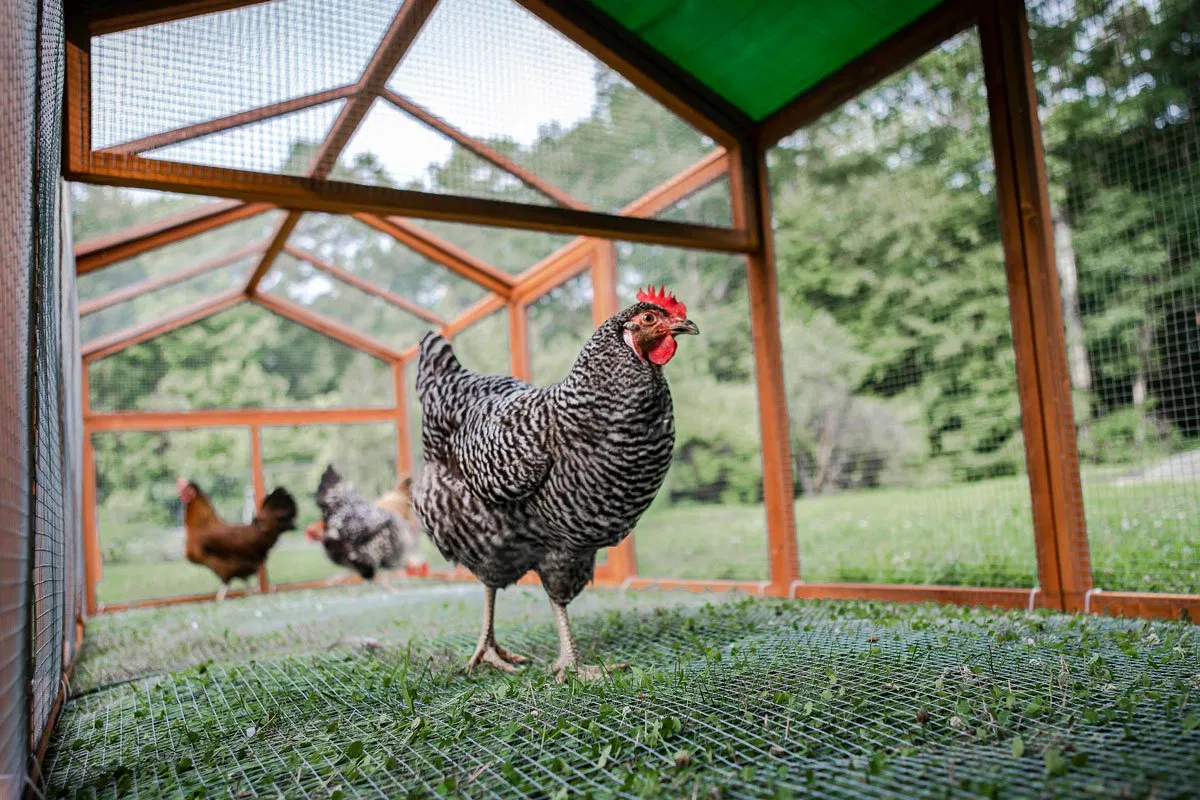
Instead, create a secure area within or adjacent to your main run. A simple partition made of hardware cloth or chicken wire works perfectly. This allows the old guard to see, smell, and "talk" to the new recruits without being able to actually land a beak.
Why Visual Contact Matters
For 7 to 14 days, let them live side-by-side. The established hens will puff their feathers and pace the wire. This is normal. They are getting the "aggression" out of their system. By the time the barrier comes down, the newcomers are no longer "strangers", they’re just the annoying kids from next door.
Step 2: Weaponize Your Nutrition (The Stress Recovery Kit)
Stress is the silent killer in poultry. When a chicken is stressed by a changing social environment, its cortisol levels spike, which suppresses its immune system. This is when birds get sick, stop growing, or succumb to minor injuries.
To combat this, we recommend what we call the Flock Stress Recovery Kit. Before, during, and after integration, you need to fortify your birds’ internal defenses.
Key Strategy: Stress-Reduction Through Nutrition
One of the fastest ways to reduce pecking pressure is to keep birds full, satisfied, and nutritionally stable. When feed quality is low (or protein is too low), chickens stay in “foraging mode,” which ramps up competition and can increase the urge to peck, chase, and bully—especially when new birds show up.
High-quality nutrition is a flock management tool, not just a “nice to have.” During introductions, aim for a high-protein feed (20%+ protein) and keep it consistently available across multiple stations. A well-fed flock is calmer, less reactive, and less likely to treat new arrivals like a threat.
- Southland Organics Probiotics: These are non-negotiable. By keeping the gut flora healthy, you ensure that the stress of the pecking order doesn't turn into a respiratory or digestive blowout—and a steady gut often supports steadier behavior.
- Fertrell Vitamins: Think of this as a high-octane boost for their system. We use these in our starter chick bundles because they provide the exact micronutrients a bird needs to stay resilient. When birds feel “right” internally, they’re less likely to act out socially.
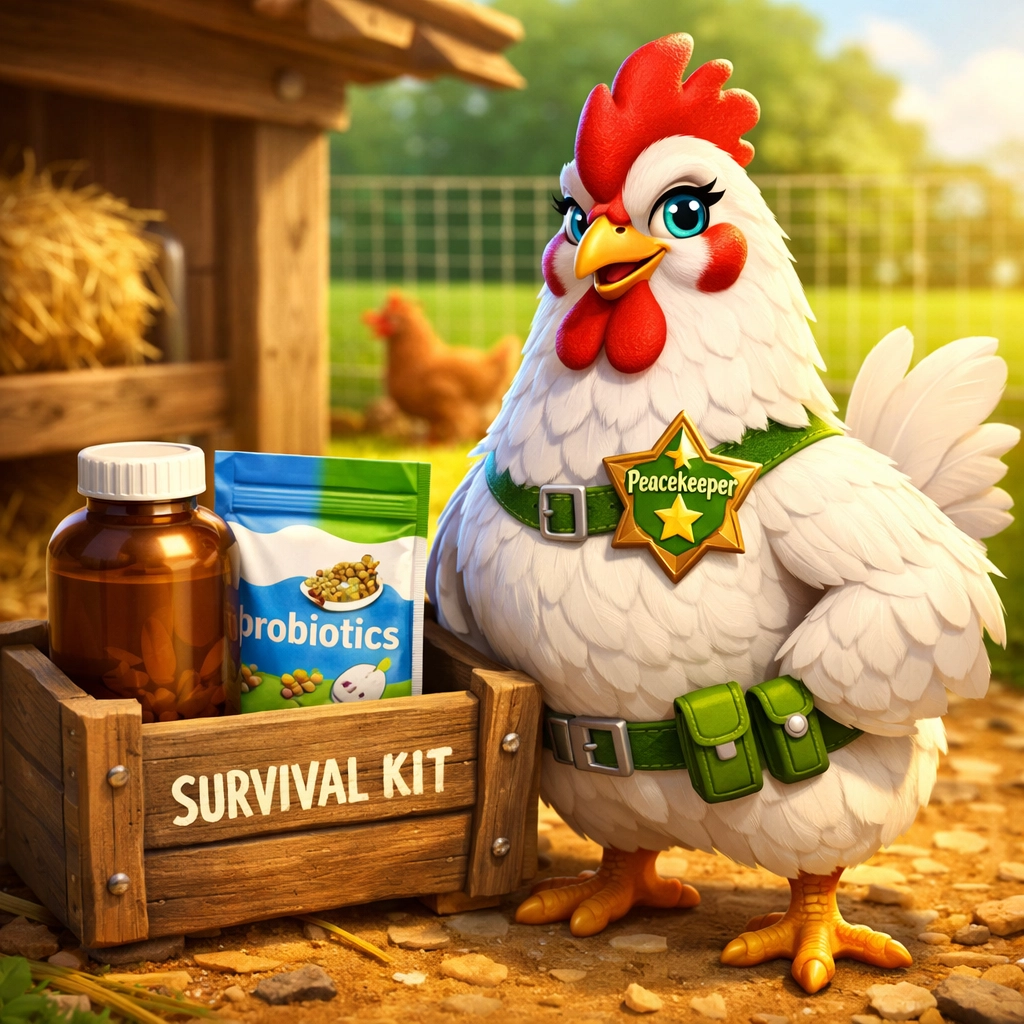
Caption: The "Survival Partner" Toolkit: Fertrell Vitamins and Southland Organics Probiotics are essential for preventing stress-related losses during integration.
Step 3: Resource Redundancy
Bullying often centers around the "Big Three": Food, Water, and Roosts. If you only have one feeder, the dominant hen will stand over it like a bouncer at a club, pecking anyone who tries to get a snack.
To stop chicken bullying, you must play a game of distraction. Add at least two additional feeding and watering stations in the run. Place them far enough apart that one hen cannot guard both at the same time. If the "Mean Girl" is guarding Station A, the new pullets can quietly slip over to Station B.
Step 4: The Midnight Merge
When the 2-week "see-but-don't-touch" period is over, don't just open the gate at noon. That’s an invitation for a high-noon showdown. Instead, wait until the sun goes down and the established flock is settled on their roosts.
Go into the coop quietly and place the new birds on the roosting bars next to the old ones. Chickens are very docile in the dark. They will wake up the next morning, look at the bird next to them, and think, "I guess you've been here the whole time." It’s a psychological trick that bypasses a lot of the initial daytime territorialism.
Step 5: Know When to Intervene
During the first few days of physical contact, there will be pecking. It’s unavoidable. The birds have to decide who is #4 and who is #5 in the hierarchy. However, you need to know the difference between "social correction" and "dangerous bullying."
| Observation | Action Required |
|---|---|
| Quick peck on the head/back | None. This is standard communication. |
| Chasing away from food | Monitor. Ensure your extra feeders are accessible. |
| Drawing blood or "pinning" | Intervene. Remove the aggressor (not the victim). |
| Continuous huddling in a corner | Support. Check for injuries and boost electrolytes. |
If things get bloody, remove the bully, not the victim. If you remove the victim, you are just delaying their eventual integration. If you remove the bully for 48 hours and put her in "chicken jail" (a separate crate), she loses her social standing. When she returns, she’s the "new" one and will be much humbler.
Starting with the Right Foundation
The easiest way to ensure a successful integration is to start with healthy, vigorous birds that have the "survival" genetics to hold their own. At AZ Chickens, our focus is on hardy, resilient birds. Whether you are looking for our heat-hardy chicks or colored egg layers, our birds are raised with a focus on robust health from day one.
We aren’t just selling you a product; we are selling you a successful backyard experience.
Summary: The Integration Cheat Sheet
| Phase | Duration | Goal |
|---|---|---|
| Quarantine | 14 Days | Ensure no diseases are brought to the flock. |
| Visual Contact | 7-14 Days | Reduce "stranger danger" using a wire barrier. |
| Nutritional Boost | Ongoing | Use Southland Organics and Fertrell to manage stress. |
| The Merge | Overnight | Physical integration while the birds are sleepy. |
| The Evaluation | 1 Week | Watch for blood; provide multiple resource stations. |
Final Thoughts: You’ve Got This
Seeing your birds spar can be nerve-wracking, but remember that chickens have been doing this for thousands of years. By following the No-Pecking Protocol: providing a visual introduction, doubling your resources, and supporting their health with our recommended supplements: you are setting your flock up for a lifetime of productivity.
Don't let the fear of the pecking order stop you from growing your flock. With a little patience and the right "survival" mindset, you’ll have a harmonious backyard community in no time. If you’re ready to add more diversity to your coop, check out our soonest available chicks and let's get growing together.