
Si este fin de semana recoges tu primera caja de pollitos en la oficina de correos y sientes que no tienes idea de qué hacer a continuación, no estás solo.
La mayoría de los nuevos propietarios piensan que la mayor amenaza para sus aves es un halcón o un coyote. En realidad, el asesino número 1 de las nuevas parvadas ocurre en las primeras 24 horas. Se llama estrés por envío.
El estrés por envío en los pollitos es lo que sucede cuando un pájaro diminuto, de un día de nacido, pasa 48 horas en una caja oscura. Son resistentes, pero llegan deshidratados, cansados y sin energía. Si no tienes un plan en el momento en que llegas a casa, es posible que mañana por la mañana te encuentres buscando en Google "por qué se mueren los pollitos".
Pero no te preocupes. Tenemos el protocolo exacto para llevar a tus aves de la caja de envío a una parvada próspera.
Por qué importan las primeras 24 horas
Cuando un pollito nace, absorbe el resto de su saco vitelino. Esto les da suficiente energía para sobrevivir el viaje desde la incubadora hasta tu oficina de correos. Pero esa energía se agota rápidamente.
Para cuando abres esa caja, tus pollitos están "funcionando con lo mínimo". Si no reciben agua y calor de inmediato, sus órganos comienzan a fallar. Por eso ves un pollito que no come ni bebe: simplemente está demasiado cansado para intentarlo.
Así es como detienes el ciclo y salvas a tus aves.
Paso 1: La recogida rápida
Tus pollitos llegarán a tu oficina de correos local. No serán entregados en tu puerta. La oficina de correos te llamará: a menudo muy temprano por la mañana.
No esperes.
Cada hora que esos pollitos pasan en la oficina de correos es una hora que no están bebiendo. Ve a buscarlos de inmediato. Mantén tu coche caliente (alrededor de 24 grados Celsius) pero mantén la caja fuera de la luz solar directa. En Arizona, una caja al sol puede convertirse en un horno en minutos.
Paso 2: El "agua mágica" (Hen Helper)
Lo primero que necesita un pollito no es comida. Es hidratación. Pero el agua sola no es suficiente para un ave estresada.
Piensa en ello como un atleta corriendo una maratón en el calor de Phoenix. No solo necesitan agua; necesitan electrolitos. Recomendamos usar Hen Helper de Southland Organics. Es una mezcla de probióticos y electrolitos que impulsa la salud intestinal de los pollitos.
La técnica de inmersión del pico
Los pollitos no siempre saben dónde está el agua cuando llegan por primera vez. Tienes que enseñarles.
- Llena tu bebedero con agua a temperatura ambiente.
- Mezcla tu Hen Helper (usa el código azchickens para un descuento).
- Coge cada pollito uno por uno.
- Sumerge suavemente solo la punta de su pico en el agua.
- Observa cómo inclinan la cabeza hacia atrás para tragar.
Una vez que dan ese primer sorbo de "agua mágica", su tasa de supervivencia se dispara.

Paso 3: Calor sin riesgo de incendio
Aquí es donde muchas guías de cuidado de pollitos para principiantes se equivocan. Durante años, la gente usó lámparas de calor montadas en el techo.
Deja de usar lámparas de calor.
Las lámparas de calor son la causa número 1 de incendios en gallineros. También son difíciles de regular. Si la bombilla está demasiado cerca, cocinas a los pollitos. Si está demasiado lejos, se congelan. En Arizona, donde la temperatura puede subir 40 grados en un solo día, las lámparas de calor son peligrosas.
En su lugar, usa una placa de calor radiante.
Una placa de calor imita a una gallina madre. Los pollitos se meten debajo para calentarse y salen cuando terminan. Es mucho más segura, usa menos energía y evita que tus pollitos tengan "pasty butt" (trasero pastoso) causado por el sobrecalentamiento.
Paso 4: El alimento adecuado
Quieres que tus pollitos crezcan, pero no quieres sobrecargar sus sistemas.
Usa un alimento iniciador/crecedor sin medicación.
A menos que tu parvada esté luchando activamente contra un brote de coccidiosis, no necesitas alimento medicado. Un alimento sin medicación de alta calidad con al menos un 20% de proteínas les proporciona todo lo que necesitan para desarrollar plumas y músculos.
Mantén el comedero lleno. Los pollitos comen pequeñas cantidades durante todo el día y la noche.
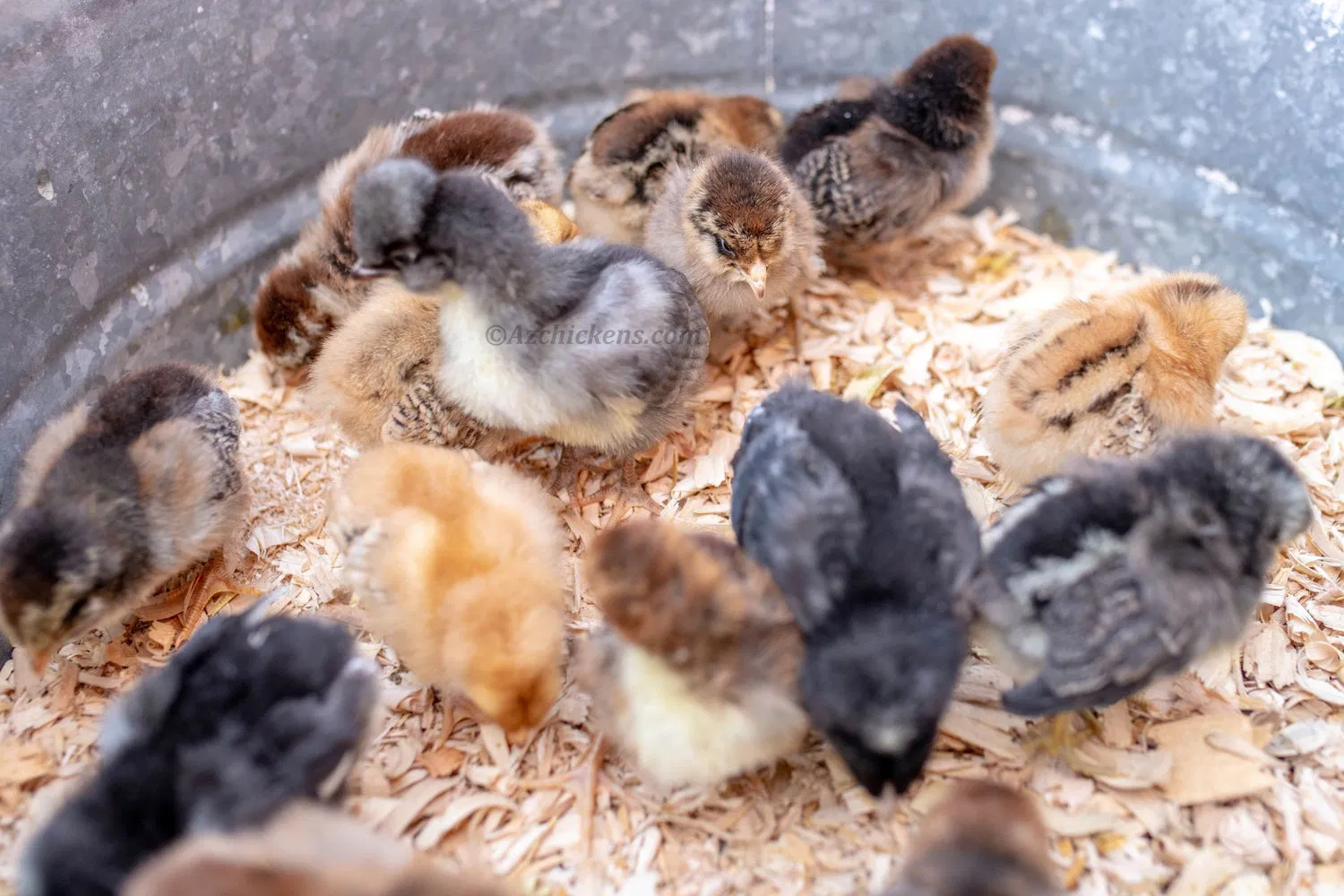
La perspectiva de Arizona: Cría en el desierto
Criar pollitos en Arizona es diferente a criarlos en el Medio Oeste.
Si estás criando a tus pollitos en un garaje o en un cobertizo de patio con paredes de bloques durante el verano, tienes que vigilar la temperatura ambiente. Aunque los pollitos necesitan un lugar a 35 grados Celsius debajo de su placa de calor, el resto de la criadora debe estar más fresco.
Si tu garaje está a 40 grados Celsius, tus pollitos no tienen adónde ir para refrescarse. Empezarán a jadear, lo que lleva de nuevo a ese asesino número 1: la deshidratación. Asegúrate siempre de que tu criadora tenga una "zona fresca" donde puedan escapar del calor.
Lista de verificación para tus primeras 24 horas
Si sigues esta lista, estás haciendo todo bien:
- Recogiste los pollitos dentro de 1 hora de la llamada de la oficina de correos.
- Preparas la criadora con una placa de calor radiante (precalentada).
- Mezclaste Hen Helper en agua a temperatura ambiente.
- Sumergiste cada pico para asegurar que todos bebieran.
- Proporcionaste alimento iniciador sin medicación en un comedero del tamaño adecuado para pollitos.
- Revisaste la "zona fresca" para asegurarte de que la criadora no es un horno.
Qué hacer si un pollito parece débil
Si ves un pollito que no come ni bebe, o uno que está encorvado y temblando, es probable que esté sufriendo un estrés extremo por el envío.
- Sepáralo de los demás para que no lo pisen.
- Usa un gotero para poner una gota de agua con Hen Helper en el costado de su pico.
- Colócalo directamente debajo de la placa de calor.
- Repite cada 30 minutos.
La mayoría de las veces, ese impulso extra de electrolitos es todo lo que necesitan para recuperarse.

Tú puedes con esto
Ver prosperar a esos primeros pollitos es la mejor sensación del mundo. Estás construyendo algo especial para tu familia. Al enfocarte en las primeras 24 horas y usar las herramientas adecuadas, estás preparando a tu parvada para una vida larga y saludable.
¿Listo para darles a tus pollitos el mejor comienzo?
Hemos reunido todo lo que usamos para nuestras propias parvadas del desierto. Desde las mejores placas de calor hasta los suplementos que realmente funcionan.
Consigue el kit de recuperación para el "estrés por envío"
No esperes a que llegue la caja para darte cuenta de que te faltan los elementos esenciales. Consigue hoy mismo una botella de electrolitos y probióticos Hen Helper. Es la póliza de seguro más barata que puedes comprar para tus nuevas aves.
Compra en Southland Organics y usa el código azchickens al finalizar la compra para obtener un descuento especial en tu primer pedido.
¿Quieres nuestra lista de verificación "De la criadora al patio trasero"?
Suscríbete a nuestra lista de correo y te enviaremos nuestra guía gratuita en PDF sobre cómo manejar a tus pollitos desde el primer día hasta el primer huevo. ¡Suscríbete aquí!