
In the arid stretches of the Southwest, managing a chicken coop is a game of thermodynamics. When the mercury hits 115°F, your coop can quickly transform from a shelter into a convection oven. The difference between a thriving flock and a tragic afternoon often comes down to a single technical concept: airflow. However, there is a common misconception among backyard keepers that more air is always better. While ventilation is the lifeblood of a healthy coop, a "draft" can be a silent killer during the unpredictable temperature swings of an Arizona spring or autumn.
Understanding the fine line between a cooling breeze and a destructive draft is essential for anyone looking to upgrade their setup or build a custom high-performance coop. This guide breaks down the technical physics of coop airflow, specifically tailored for high-heat, low-humidity environments.
Key Points for Arid Coop Management
- Ventilation is Essential: It removes ammonia, dust, and excess heat.
- Drafts are Dangerous: Direct, high-velocity air hitting roosting birds can cause respiratory stress and chilling during night-time temperature drops.
- The "Stack Effect": Utilizing the principle that hot air rises to create passive, draft-free cooling.
- Hardware Cloth Placement: Strategic positioning of mesh vs. solid walls determines the safety and comfort of the flock.
- Roof Insulation: A critical barrier that prevents radiant heat from "baking" your birds from above.
1. The Physics of Airflow: Breeze vs. Draft
To the human observer, air is just air. To a chicken, the velocity and direction of that air are matters of biological importance.
Ventilation is the process of exhausting stale air and replacing it with fresh air. In a well-ventilated coop, the air moves slowly and consistently, preventing the buildup of ammonia and moisture. Because chickens have a respiratory system that is significantly more sensitive than ours, they require constant air exchange to prevent the accumulation of fine dust: a major byproduct of the "dust bathing" behavior common in arid climates.
A Draft, by contrast, is a focused stream of air that blows directly onto the birds, particularly while they are roosting. In the desert, we face 40-degree temperature swings. A breeze that feels refreshing at 4:00 PM can become a chilling draft at 3:00 AM. When a chicken is subjected to a draft, its feathers are ruffled, breaking the insulating layer of air trapped against its skin. This causes the bird to burn through its energy reserves to maintain body temperature, leading to a weakened immune system.
The Technical Distinction
| Feature | Ventilation | Draft |
|---|---|---|
| Location | Usually near the roofline or gables. | Usually at or below roost level. |
| Speed | Slow, passive exchange. | Direct, high-velocity stream. |
| Purpose | Air quality and temperature regulation. | Accidental air intrusion through gaps. |
| Effect | Flushes ammonia and heat. | Chills the bird and causes stress. |

2. Managing the Arid Climate Advantage
Unlike the humid East Coast, where coop builders struggle with moisture and mold, our primary enemies in the Southwest are heat radiation and fine particulate dust.
In an arid environment, chicken droppings dry out almost instantly. This sounds like a blessing, but as the birds move around, that dry waste pulverizes into a fine powder. Without high-level ventilation, this dust hangs in the air, leading to "rattling" or respiratory infections.
Furthermore, we must account for the "Heat Island Effect" within the coop. Solid walls, while great for security, can trap heat long after the sun goes down. This is why many experienced desert keepers moving away from traditional "shed-style" coops and toward "open-air" designs.
3. Strategic Placement: Hardware Cloth vs. Solid Walls
When designing or modifying a coop for the desert, your choice of materials is just as important as the layout.
The Low-Level Solid Wall
In most arid-climate coops, the bottom 2 to 3 feet of the coop should be solid. This serves two purposes:
- Draft Protection: It blocks the wind from hitting the birds while they are on the ground or in the nesting boxes.
- Litter Retention: It keeps your sand or bedding from blowing away in our frequent dust storms.
The High-Level Hardware Cloth
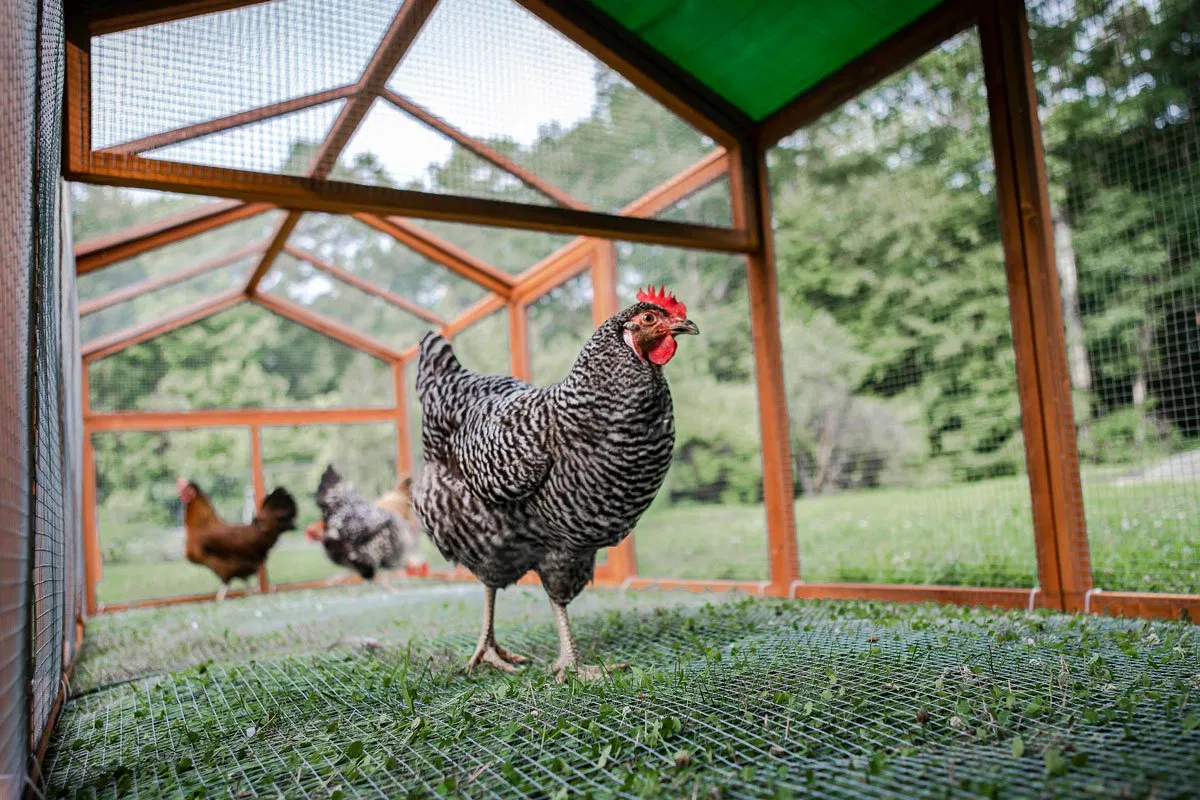
From the 3-foot mark up to the roofline, hardware cloth is your best friend. Unlike standard chicken wire (which predators can tear through like paper), heavy-duty hardware cloth allows for maximum airflow while keeping out snakes, coyotes, and hawks.
By placing large sections of hardware cloth on the leeward side of the coop (the side facing away from the prevailing winds), you allow for massive air exchange without creating a wind tunnel. You can see this design philosophy in our advanced coop setups, which prioritize vertical airflow over lateral drafts.
4. The "Stack Effect" and Roof Design
In a high-heat environment, you cannot rely solely on the wind. You must use the physics of rising heat: the Stack Effect.
As the sun beats down on the coop, the air inside warms up. Hot air is less dense than cool air, so it naturally rises. If your coop has vents at the very highest point (the peak of the roof or the gables), that hot air will escape. As it leaves, it creates a slight vacuum that pulls cooler air in from the lower (but still protected) vents.
Implementing the Stack Effect:
- Soffit Vents: Install vents under the eaves of the roof.
- Ridge Vents: If you have a peaked roof, ensure there is an opening at the very top.
- Gable Vents: Large openings on the triangular ends of the roof provide a massive exit point for heat.
To maximize this, ensure your roosting bars are positioned below the level of these vents. This ensures the hot air passes over the birds' heads as it exits, rather than blowing through their feathers.
5. Roof Insulation: The Unsung Hero
Many hobbyists overlook the roof. In the desert, a metal or thin wood roof acts as a radiator. It absorbs the sun’s energy and beams it directly onto the backs of your chickens. Even with great airflow, this radiant heat can lead to heatstroke.
Technical Upgrades for Summer:
- Radiant Barriers: Installing a thin layer of reflective foil under the roof can bounce back up to 97% of radiant heat.
- Rigid Foam Insulation: A 1-inch layer of foam board tucked under the roof deck can lower the internal coop temperature by 10-15 degrees.
- Light Colors: Ensure the roof is white or a light galvanized silver. Never use dark shingles or black paint in an arid climate.
By combining insulation with high-level ventilation, you create a "thermal break." The insulation stops the heat from entering, and the ventilation flushes out whatever heat manages to sneak in.
6. The 24-Hour Cycle: Handling the Temperature Swing
Arizona is famous for its "diurnal temperature range": the massive difference between day and night. It’s not uncommon to have a 105°F day followed by a 65°F night.
For the replacement buyer or the enthusiast looking to optimize their flock, this requires a "convertible" coop design.
- Removable Panels: Use plexiglass or plywood panels that can be clipped over hardware cloth sections during the winter or on particularly windy spring nights.
- Adjustable Louvers: Installing adjustable slats allows you to fine-tune the airflow depending on the season.
If you are currently managing a flock in these conditions, checking for drafts is simple. Take a piece of tissue paper or a light ribbon and hold it near your roosting bars at night. If the ribbon dances, you have a draft that needs to be blocked. If it remains still but the air feels fresh and odorless, your ventilation is perfect.
Summary of Economic and Health Benefits
Investing time into technical airflow management isn't just about comfort; it's about the bottom line.
| Benefit | Impact |
|---|---|
| Reduced Mortality | Proper ventilation prevents heatstroke, the #1 killer of desert flocks. |
| Lower Feed Costs | Birds stressed by drafts or extreme heat eat more to try and regulate their metabolism. |
| Higher Egg Production | Consistent temperatures and fresh air keep hens in their peak laying cycle. |
| Lower Vet Bills | Removing dust and ammonia prevents chronic respiratory infections (CRDs). |
For those looking to secure their investment, focusing on these structural details is more effective than any supplement or cooling fan. You can explore our product catalog for specialized hardware cloth and coop accessories that meet these technical standards.
Conclusion: Mastering the Desert Coop
Mastering the fine line between ventilation and drafts is the hallmark of an expert chicken keeper. By respecting the laws of physics: placing vents high, keeping roosts protected, and insulating the roof: you create an environment where your birds can thrive despite the harshness of an arid climate.
Whether you are modifying an existing structure or starting from scratch with one of our specialized kits, remember that air is your most powerful tool. Use it wisely, and your flock will reward you with years of health and productivity. Don't let the summer heat catch you off guard; audit your coop’s airflow today and ensure your birds are breathing easy.
Sales Call
If your current coop setup is trapping heat, pushing air directly across the roost, or lacking proper predator-safe airflow, the fastest fix is starting with the right structure. A well-designed setup makes it much easier to manage ventilation, control drafts, and protect birds during extreme desert temperature swings.
Shop our Heat-Resistant Coop Kits or Starter Kits to get the structural basics right from day one, including better ventilation planning, secure hardware cloth placement, and arid-climate-friendly coop design. It is a practical way to reduce guesswork and build a safer, more reliable setup for hot-weather chicken keeping.