
When the thermometer in the desert hits 115°F, it isn't just "hot weather" anymore: it is a physiological emergency for your backyard poultry. Unlike humans, chickens do not have sweat glands. They rely on panting and spreading their wings to release heat, but once the ambient temperature exceeds their body temperature, these natural cooling mechanisms fail. If you are raising backyard chickens in extreme climates, you need a proactive survival strategy to prevent total flock loss.
At AZ Chickens, we have navigated these brutal summers for years. We know that keeping the best egg laying chickens productive and healthy through a heatwave requires more than just a full waterer. It requires a combination of genetic resilience, environmental engineering, and emergency intervention.
Key Takeaways for Summer Safety
- Breed Selection: Prioritize heat-hardy breeds like Australorps, Easter Eggers, and Marans.
- Hydration is Vital: Provide multiple water sources with electrolytes and ice blocks.
- Environmental Cooling: Use deep shade, high-pressure misters, and optimized cross-ventilation.
- Dietary Management: Avoid high-protein or heavy grain feeding during the hottest parts of the day.
- Monitoring: Identify signs of heat stress early to provide life-saving intervention.
Why 115°F is a Survival Milestone
Chickens have a high internal body temperature, typically between 105°F and 107°F. When the outside air reaches 115°F, the environment is actively heating the bird rather than absorbing its excess body heat. This leads to heat exhaustion and, eventually, organ failure.
To keep your birds alive, you must create a microclimate that is significantly cooler than the surrounding desert. This starts with understanding the biology of your flock and ends with the physical infrastructure of your coop. For more details on the basics of getting your coop ready, check out our Getting Started guide.
Step 1: Choosing Heat-Hardy Breeds
Not all chickens are built for the desert. If you are a replacement buyer or a homesteader looking to start a new flock, your first line of defense is genetics. Large, heavy-feathered birds or those with small combs (like Brahmas or Buckeyes) often struggle in the heat because they cannot dissipate warmth efficiently.
When selecting the best egg laying chickens for high-heat environments, look for birds with larger combs and wattles. These acts as radiators, circulating blood close to the surface where it can be cooled by the air.
The Best Breeds for Extreme Heat
| Breed | Traits | Why They Thrive |
|---|---|---|
| Black Australorp | Excellent layers, calm temperament | Surprisingly hardy in both heat and cold despite dark feathers. |
| Easter Egger | Lightweight, varied plumage | Their smaller body mass makes it easier for them to stay cool. |
| Barred Rock | Robust, productive | A classic backyard poultry choice that handles temperature swings well. |
| Cuckoo Marans | Hardy, dark egg layers | Dense but manageable plumage and great foraging instincts. |

A healthy Black Australorp or a Barred Rock is a fantastic choice for an Arizona backyard. These birds are resilient and tend to maintain egg production even when the weather gets tough. You can find many of these breeds in our chickens for sale section.
Hydration: Beyond the Basic Waterer
In 115°F weather, a chicken can drink up to a liter of water a day. If their water source becomes hot, they will stop drinking, leading to rapid dehydration and death.
Strategies for Cooling Water
- Ice Blocks: Freeze large Tupperware containers of water to create massive ice blocks. Drop these into the waterers in the morning. They will melt slowly throughout the day, keeping the water cool for hours.
- Frozen Treats: Freeze watermelon slices, cucumbers, or berries. These provide hydration and nutrients while lowering the bird's internal core temperature.
- Electrolytes: Use poultry electrolytes in at least one of their water sources. Extreme heat causes birds to lose essential minerals through panting.
- Multiple Locations: Chickens are often too hot to move long distances. Place waterers in every shaded area of the run so they never have to cross a "hot zone" to drink.
Environment and Housing: Engineering the Microclimate
The design of your chicken run can be the difference between life and death. Shade is your most powerful tool, but it must be "active" shade.
Shade and Ground Temperature
Direct sunlight on the desert floor can heat the ground to over 150°F. If your chickens are standing on this, their feet will absorb that heat. Use deep mulch, straw, or wood shavings in the run and keep them damp. The evaporation from the ground will naturally lower the air temperature around the birds’ feet.
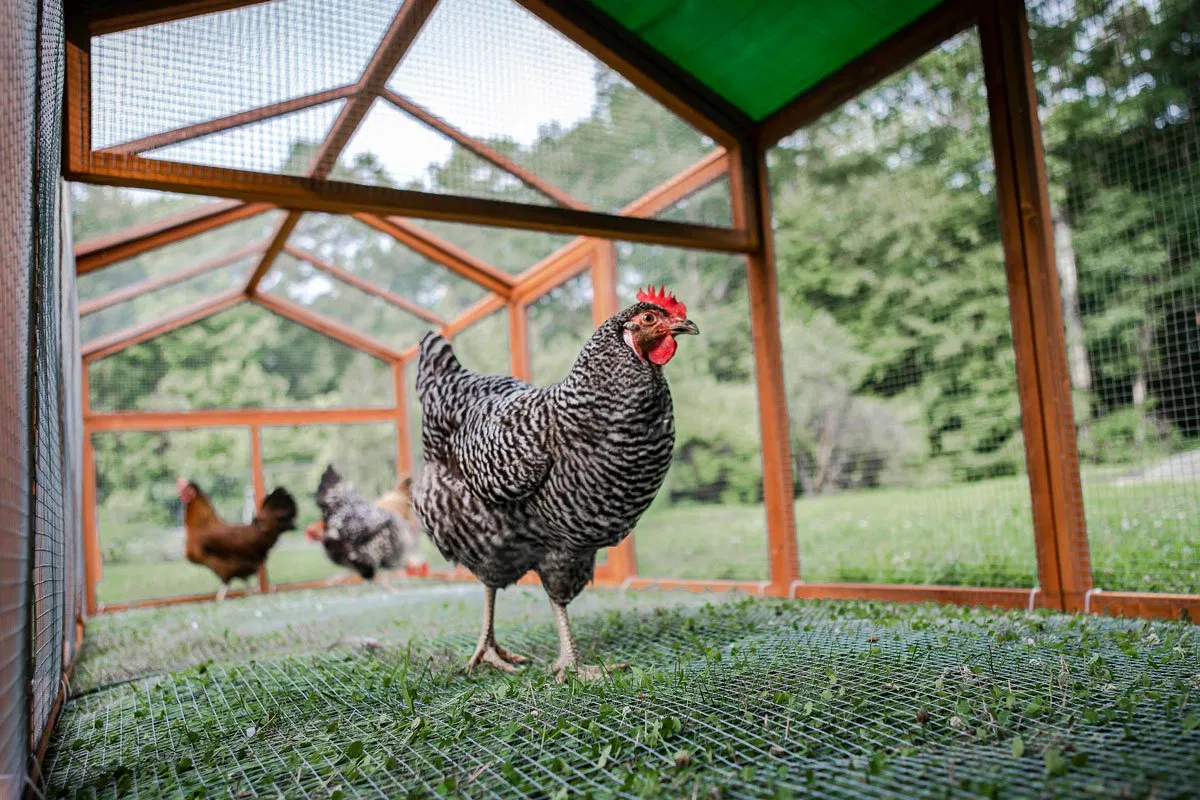
A secure, shaded run like the one shown above gives replacement buyers and hobbyists a practical way to protect the birds they have already invested in. In Arizona heat, shade and outdoor protection are not optional extras—they are Survival Insurance that helps reduce stress, prevent losses, and keep your flock functioning through dangerous summer temperatures. For a deeper dive into desert-specific housing, see our page on how to help chickens in the desert.
The Role of Misters and Ventilation
A homemade mister system is one of the most effective ways to lower the temperature by 15–20 degrees. Place the misters in a well-ventilated area. If you use misters in a stagnant, enclosed coop, you will create a "sauna" effect, which is actually more dangerous for the birds because the high humidity prevents their panting from being effective.

Pro Tip: Set your misters to run on a timer during the peak heat hours (11:00 AM to 6:00 PM). Ensure the water is hitting the air or the ground, not directly soaking the birds, as wet feathers can sometimes interfere with their natural insulation if the wind picks up.
Dietary Adjustments During Heatwaves
Digestion generates internal body heat. During a 115°F heatwave, you want to minimize the amount of "metabolic heat" your chickens produce.
- Avoid Corn and Scratch: Digesting heavy grains like corn requires a lot of energy and generates significant internal heat. Save these for the winter.
- Morning Feeding: Encourage your birds to eat their main meal early in the morning before the temperature peaks.
- Low-Protein Snacks: While protein is great for egg production, excessive protein during a heatwave can increase metabolic strain. Stick to hydrating snacks like chilled greens and watery fruits.
- Feed Placement: Move food bowls into the shade. If the food is in the sun, the chickens simply won't eat.
For a structured approach to seasonal feeding, review our Feed Plan.
Identifying and Treating Heat Stress
Even with the best preparation, some birds may struggle. You must be able to spot the signs of heat stress before it turns into heat stroke.
Signs of Heat Stress:
- Panting: Open-mouth breathing is the first sign.
- Pale Combs/Wattles: This indicates the bird is struggling to regulate blood flow.
- Lethargy: If a bird is laying flat on the ground with wings spread and won't move when approached, it is in trouble.
- Diarrhea: Excessive water intake and stress lead to loose droppings.
Emergency First Aid
If you find a bird suffering from heat stroke, do not dunk it in ice water. This can cause the bird to go into shock and die. Instead, bring the bird into a cool (not cold) area, like a garage or laundry room. Dip its feet and lower belly in lukewarm water. This allows for a gradual cooling of the core temperature. Offer cool water with electrolytes via a dropper if necessary.

Breeds like the Easter Egger are often more "flighty" and active, which can sometimes lead to them overexerting themselves in the heat. Keep a close eye on your more active birds.
Summary of Economic and Practical Benefits
Investing in heat safety isn't just about animal welfare; it's about protecting your investment. High-quality backyard poultry represents a significant investment in time and money.
| Investment | Benefit |
|---|---|
| Mister System | Prevents flock loss and maintains egg production. |
| Electrolytes | Reduces recovery time after a heatwave. |
| Heat-Hardy Breeds | Lower mortality rates and better long-term success. |
| Proper Ventilation | Prevents respiratory issues and mold in the coop. |
By following these strategies, you can ensure that your flock doesn't just survive the summer: they thrive through it. Whether you are looking for advice on raising backyard chickens or need to restock your flock with hardy juveniles, AZ Chickens is here to support your homesteading journey.
The desert is a challenging environment, but with the right breeds and a solid heat-safety plan, you can enjoy fresh eggs year-round, even when the mercury hits those triple digits. Stay cool, keep your waterers full, and watch your flock closely. Success in the heat is all about preparation.